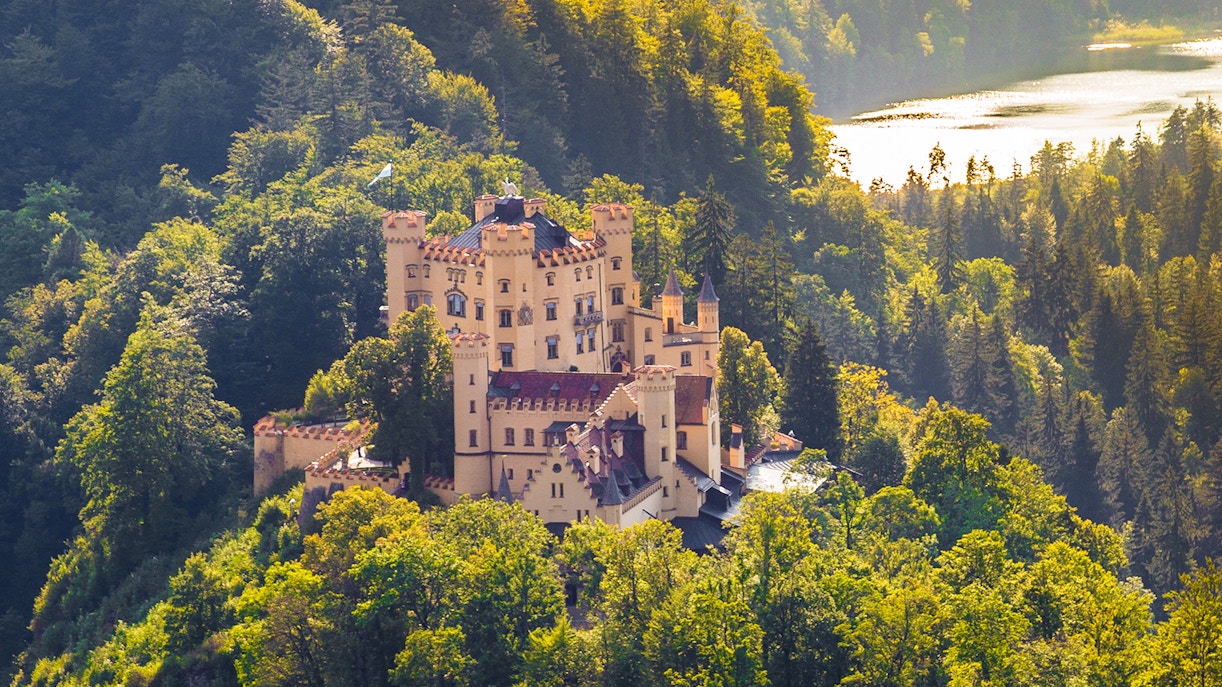
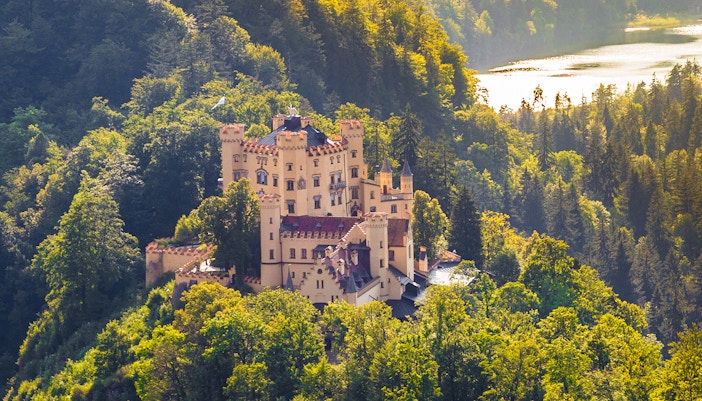
- Royal roots: Hohenschwangau Castle was built as a summer retreat for King Maximilian II, King Ludwig II's father. The younger Ludwig spent much of his childhood here and the castle shaped his fascination with medieval legends and knights, a theme central to another of his famous palaces, the Neuschwanstein Castle.
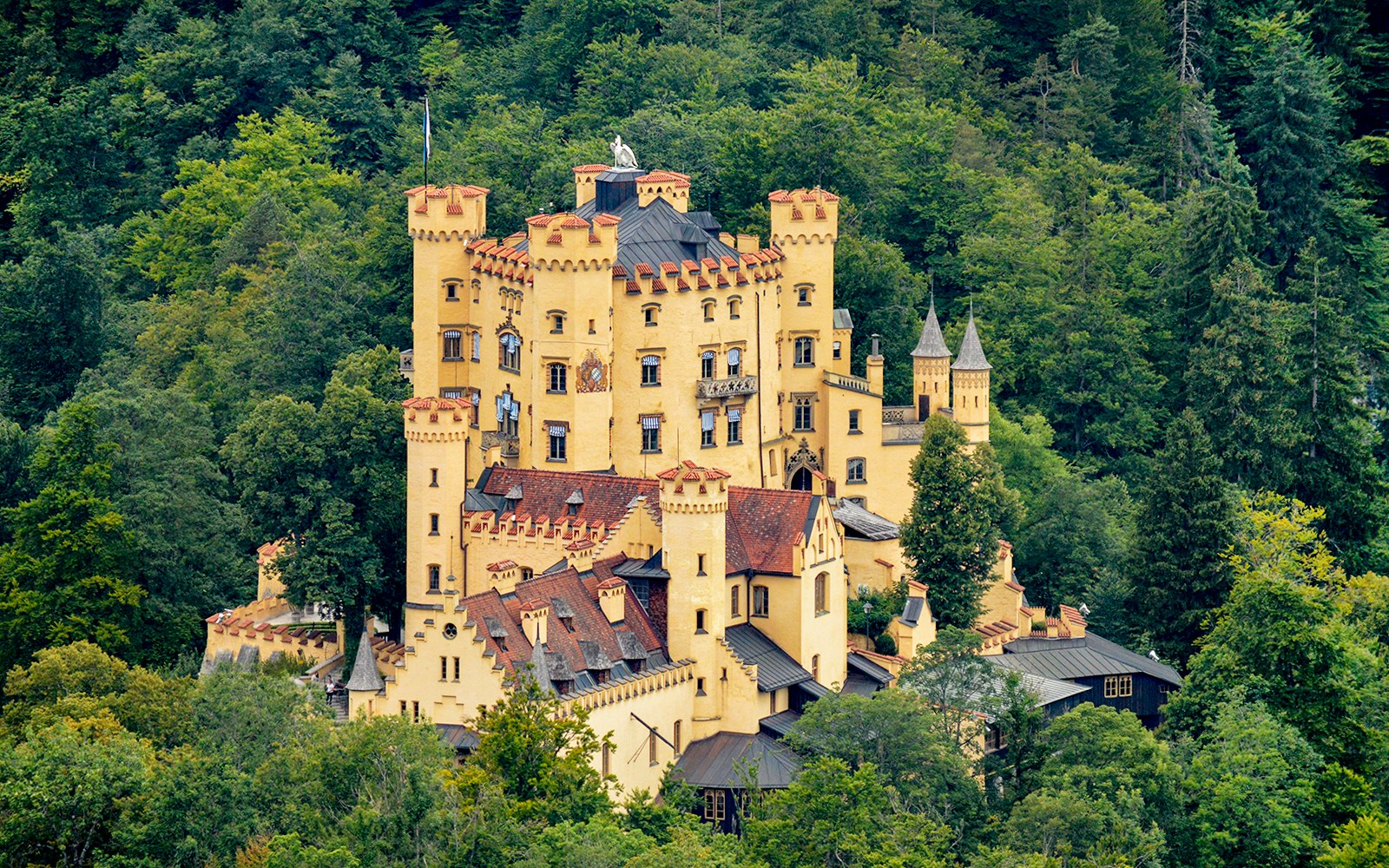
- Gothic grandeur: The castle boasts stunning Gothic architecture, characterized by pointed arches, ribbed vaulted ceilings, stained glass windows, and intricate stonework. This style, emphasizing the interplay of light and shadow, evokes a sense of grandeur and mysticism, perfectly suited for a Romantic fairytale castle.
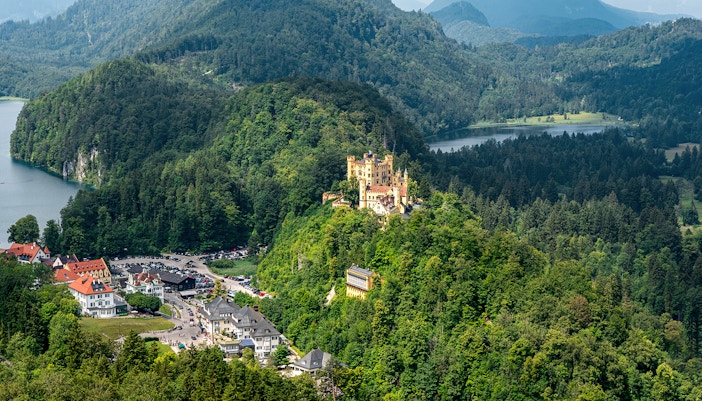
- Alpine paradise: The castle is nestled amidst the stunning Bavarian Alps, offering expansive views of the emerald green waters of the Alpsee Lake and the dramatic peaks beyond. The region's peaceful ambiance provides a perfect escape from the hustle and bustle of everyday life.
- A fairytale castle: With vibrant frescoes, depicting scenes from myths and legends, opulent furnishings, and a dramatic Alpine setting, perched above the Alpsee Lake, visiting the Hohenschwangau Castle feels like stepping into a real-life fairytale.
- Perfect for a day trip: Hohenschwangau is just a short walk from Neuschwanstein Castle, making it easy to visit both castles in one day. If you love history and art, we recommend you explore both these castles for a closer look at the opulence of the Bavarian royalty.
Hohenschwangau Castle, King Ludwig II's childhood residence
Nestled amidst the Bavarian Alps, Hohenschwangau Castle was built by King Maximilian II as a summer retreat. The 19th-century castle boasts stunning Gothic architecture and a rich interior adorned with frescoes. The castle was King Ludwig II's childhood playground, also responsible for sparking his lifelong fascination with medieval knights and Arthurian legends—a fantasy reflected in his more famous creation, the Neuschwanstein Castle.
Why visit the Hohenschwangau Castle?
How to skip the line at Hohenschwangau Castle?
Hohenschwangau, the childhood home of King Ludwig II, offers fascinating insights into his life and love for the arts. The frescoes and motifs inside the castle depict scenes from Wagner’s operas. The castle is right next to Neuschwanstein and receives hundreds of visitors every year.
Get past long lines at the entrance and enjoy priority access to the castle with Hohenschwangau Castle skip-the-line tickets. These tickets also include an audio guide, available in over 19 languages, for you to explore at your own pace and learn more about the castle’s history and architecture.
Plan your visit to Hohenschwangau Castle
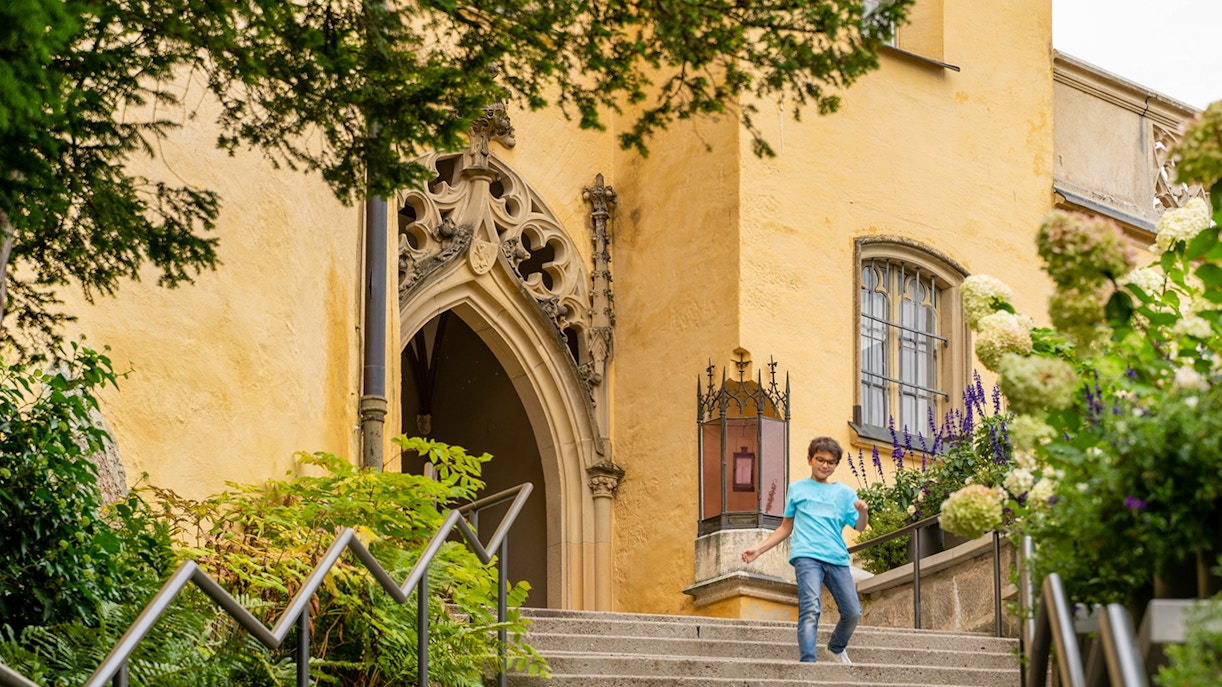
The Hohenschwangau Castle's opening times vary with the season. Due to the longer daylight hours during the summer months, the castle is open for an extra hour in the evening, giving you more time to explore the castle.
- 23 March to 15 October: 9am to 5pm
- 16 October to 22 March: 10am to 4pm
Note:
- The castle is closed on December 24th, 25th, and 31st, as well as January 1st.
- There is no elevator in the castle and you have to climb 90 steps during the tour.
Address: Alpseestraße 30, 87645 Schwangau, Germany
Find on maps
- By bus: You can get to Hohenschwangau Castle from the Memmingen Airport by taking the FlixBus 163 to Füssen (Kemptener Straße). Then you can walk to Bahnhof, Füssen, and take bus number 9651 or 73 to get down at the Hohenschwangau Gymnasium bus stop to get to the castle.
- By car: Take the A96 from the Memmingen Airport and merge into A7 at Kemptener. Then take the B310 to your destination in Hohenschwangau, Schwangau.
Who built the Hohenschwangau Castle?
Crown Prince Maximilian, later King Maximilian II of Bavaria, discovered the ruins of a medieval castle called Schwanstein while on a hike in 1819. Enchanted by the location, he purchased the ruins and embarked on an ambitious project to rebuild them in the Romantic architectural style. Construction lasted from 1833 to 1837. Maximilian envisioned Hohenschwangau not just as a residence but as a homage to medieval German history and legends. The resulting castle reflected his passion for knighthood and sagas, also inspiring his son, the future King Ludwig II to take an interest in the arts.
History of the Hohenschwangau Castle
- Origins (1819): Crown Prince Maximilian, later King Maximilian II of Bavaria, discovered the ruins of a medieval castle called Schwanstein while on a hike. He was enchanted by the location and decided to buy the ruins.
- Transformation (1833-1837): Maximilian II envisioned Hohenschangau not just as a residence but as a homage to medieval German history and legends. He embarked on an ambitious project to rebuild the castle in the Romantic architectural style. The resulting castle reflected his passion for knighthood and sagas, becoming a retreat for him and his family, including his son, the future King Ludwig II.
- Royal inspiration (Mid-19th Century): King Ludwig II spent much of his childhood at Hohenschwangau Castle. The castle's beauty and its connection to medieval legends would leave a lasting impression on him.
- A new dream (1868): After he acceded to the throne, Ludwig II set out to build a “New Hohenschwangau Castle"—what we know today as Neuschwanstein Castle. He envisioned Neuschwanstein to be an even more impressive recreation of a medieval-style castle, a fairy-tale vision of monarchy.
- Shifting plans (1868-1886): The construction of Neuschwanstein was a complex and ever-evolving project. Ludwig II was known for his meticulous attention to detail and his desire to incorporate modern features into the castle. This, along with the challenging mountaintop building site, caused delays. As the project progressed, Ludwig II also made changes to the plans, such as replacing guest rooms with a grand Throne Room.
- Legacy (1886-Present): Neuschwanstein was never fully completed. Ludwig II died in 1886, and the castle was opened to the public as a museum shortly thereafter. Today, both Hohenschwangau and Neuschwanstein Castles are popular tourist destinations, attracting millions of visitors each year.
Hohenschwangau Castle highlights
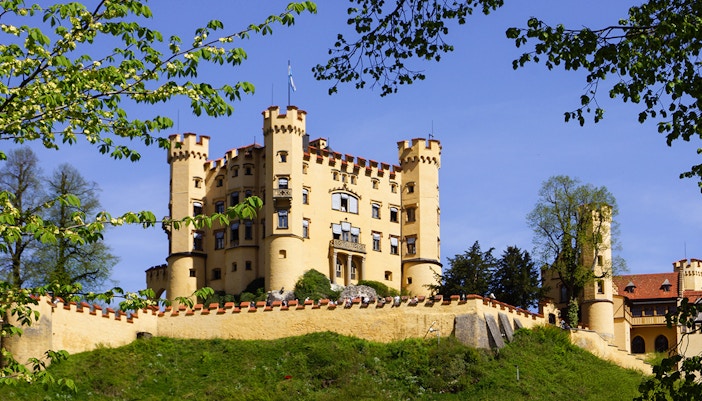
A window into royal history
Hohenschwangau served as a summer retreat for King Ludwig II's father, King Maximilian II. The castle offers a window into the lives of Bavarian royalty. Here, young Ludwig spent his childhood immersed in medieval legends and Arthurian tales, sparking a lifelong fascination that would inspire him to design the Neuschwanstein Castle.
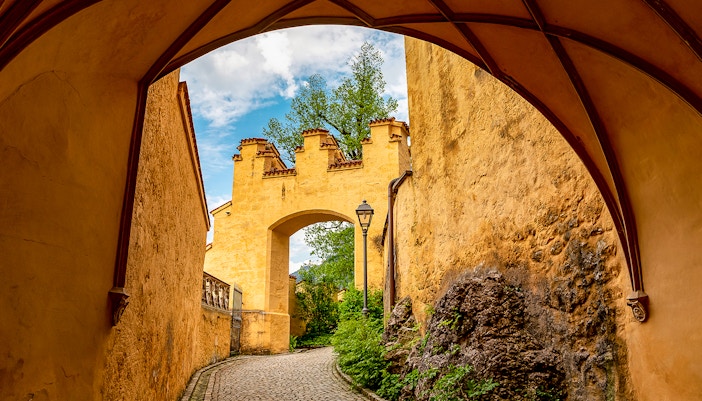
Gothic architectural gem
Hohenschangau stands as a testament to the 19th-century Gothic Revival architectural style. The castle is known for its precise stonework with pointed arches, ribbed vaulted ceilings, and ornate tracery. The colorful frescoes with scenes from Wagner's operas and medieval legends further enhance its grandeur.
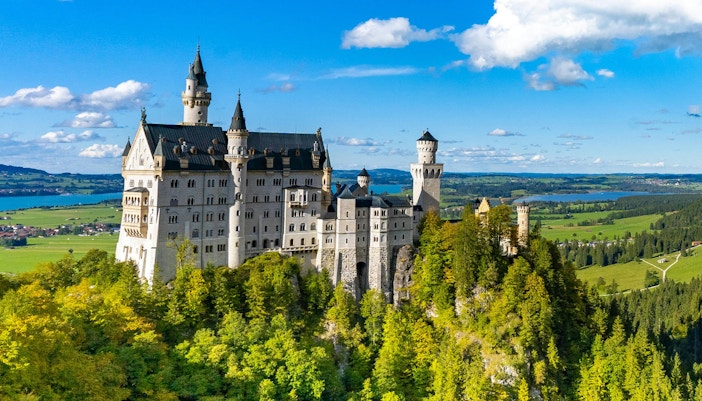
Twin to Neuschwanstein Castle
Hohenschwangau Castle is located just a short walk or carriage ride from the Neuschwanstein Castle. You can easily combine a visit to Hohenschwangau with a tour of Neuschwanstein, making it a perfect two-castle day trip. Neuschwanstein, also known as the Swan Castle, is known for its turrets, towers, and stunning alpine setting.
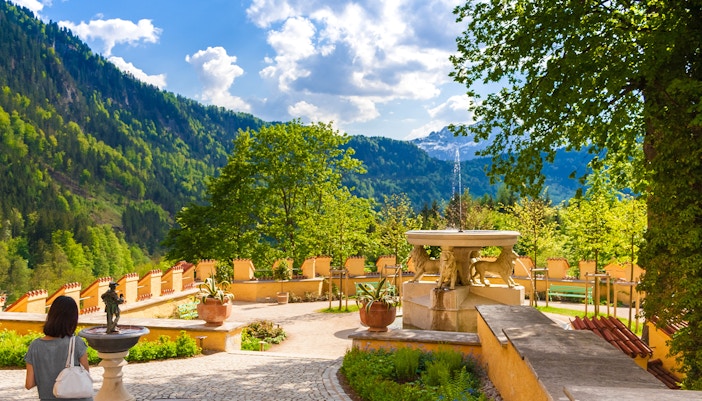
Breathtaking alpine vistas
Hohenschwangau is nestled amidst the breathtaking Bavarian Alps, offering a serene alpine escape. Towering snow-capped peaks and lush green forests create a stunning backdrop for the castle. The crystal-clear waters of the Alpsee Lake mirror the surrounding beauty, inviting you to unwind and relax. You can see for miles across the hilly countryside from the castle top.
Frequently asked questions about Hohenschwangau Castle
It is best to book Hohenschwangau Castle tickets online to ensure guaranteed access no matter the crowd on the day of your visit. Online ticket bookings are also convenient and help save time and money.
The Hohenschwangau Castle skip-the-line tickets allows you to enjoy priority access to the castle. You no longer need to wait in long lines and can directly enter the castle. Get a multilingual audio guide, available in over 19 languages, and explore at your own pace.
The Hohenschwangau Castle is the childhood home of King Ludwig II of Bavaria. It was originally built as a summer retreat for King Maximilian II, his father. The castle's connection to Ludwig II, whose extravagant projects like the Neuschwanstein is famous around the world, draws many visitors. Also, Hohenschwangau's alpine location offers a relaxing escape.
Yes, you can see Neuschwanstein from the Hohenschwangau Castle. In fact, one of the most popular photo spots is from the gardens of Hohenschwangau, where you can capture stunning views of Neuschwanstein across the valley. It's a truly magical sight!
The Hohenschwangau Castle and Neuschwanstein Castle are very close to each other. They are only about a 2 kilometer walk apart. It's a popular route for visitors. You can explore both of these iconic castles in one day.
King Maximilian II of Bavaria commissioned the construction of Hohenschwangau Castle to serve as a private summer retreat. The castle is now popular as Ludwig II's childhood home, responsible for shaping his ideas on medieval legends, which later contributed to his life-long love for the arts.
The opening hours of Hohenschwangau Castle vary depending on the season. During the summer season, which runs from March 23rd to October 15th, the castle is open daily from 9 am to 5 pm. In the winter season, from October 16th to March 22nd, the hours are a bit shorter, with the castle open daily from 10 am to 4 pm.
The Hohenschwangau Castle is located in the village of Hohenschwangau, near the town of Füssen, in the Bavarian Alps.It's in the southwestern part of Bavaria, close to the Austrian border.
To get to Hohenschwangau Castle from Memmingen Airport, you can take the FlixBus 163 to Füssen (Kemptener Straße). From there, walk to Bahnhof, Füssen, and take either bus number 9651 or 73 to the Hohenschwangau Gymnasium bus stop, which is the closest stop to the castle. If you are driving from Memmingen Airport, take the A96 and merge into the A7 at Kempten. From there, take the B310 to reach Hohenschwangau, Schwangau.
.svg?auto=compress%2Cformat&w=156&h=48&q=90&crop=faces&fit=crop)

