.svg?auto=compress%2Cformat&w=156&h=48&q=90&crop=faces&fit=crop)
Visit Hellabrunn Zoo | Your planning guide
Hellabrunn Zoo is Munich's large open-air geo-zoo, best known for its continent-themed habitats, riverside setting, and 500+ animal species spread across 40 hectares. This is not a quick stop: even a focused visit means plenty of walking, outdoor time, and some route planning. The biggest difference between a rushed day and a good one is whether you treat it as a true half-day or full-day outing. This guide covers timing, tickets, pacing, and what to prioritise.
Quick overview: Hellabrunn Zoo at a glance
Hellabrunn works best when you plan it like a real outdoor day rather than a short stop between city-center sights.
- When to visit: Daily, with longer hours in warmer months and shorter hours in winter; weekday mornings are noticeably calmer than sunny weekend afternoons, when the central paths, family zones, and indoor houses fill fast.
- Getting in: Headout currently lists one flexible self-guided entry option for Hellabrunn Zoo rather than multiple ticket tiers, so your main decision is the date and arrival time rather than which access level to choose.
- How long to allow: 4.5–5 hours suits most visitors, and meal breaks, playground stops, and lingering at active enclosures are what usually push the visit to the longer end.
- What most people miss: The quieter outer habitats, the continent-by-continent layout, and the Isar meadow setting add as much to the day as the headline animals.
- Is a guide worth it? Usually not, because this is a strong self-guided visit and a zoo map gives you more practical value here than paying extra for narration.
Jump to what you need
🕒 Where and when to go
🗓️ How much time do you need?
🎟️ Which ticket is right for you?
🗺️ Getting around
🦁 Which animals to prioritise
♿ Facilities and accessibility
Where and when to go

How do you get to Hellabrunn Zoo?
Hellabrunn sits in Thalkirchen beside the Isar meadows, south of central Munich, and is one of the easier big outdoor attractions to reach by public transport.
Tierparkstrasse 30, 81543 Munich, Germany
- Subway: U3 → Thalkirchen (Tierpark) → about 5 min walk → follow the zoo signs from the station toward Tierparkstrasse.
- Bus: Local buses serving the Thalkirchen/Tierpark area → short walk → useful if you are staying in southern Munich or arriving with a stroller.
- Bike: Isar riverside cycle paths → direct approach to the zoo area → one of the simplest ways to avoid weekend parking pressure.
- Car: Driving is straightforward, but nearby parking is easiest earlier in the day and feels much tighter after late morning on sunny weekends.
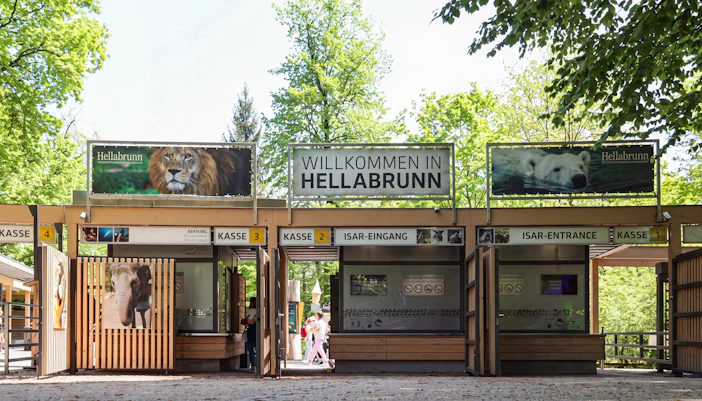
Which entrance should you use?
Hellabrunn is simpler than many major city attractions: most visitors use the main entrance, and the real mistake is arriving at the busiest time without your ticket ready.
- Main entrance: Located on Tierparkstrasse. Best for all ticket holders. Expect the smoothest entry in the first part of the day and slower queues around late morning on warm weekends and school-break days.

When is Hellabrunn Zoo open?
- Monday–Sunday: Open daily, with longer hours in spring and summer and shorter hours in late fall and winter.
- Seasonal schedule: Warmer-month days usually run later than winter days.
- Last entry: Arrive at least 1 hour before closing if you want more than a short walk-through.
When is it busiest: Sunny Saturdays, Sundays, holidays, and school-break afternoons are the heaviest because families cluster around the children's areas, food stops, and indoor animal houses.
When should you actually go: A weekday morning gives you easier paths, more room with a stroller, and better odds of seeing active animals before midday rest periods and heavier foot traffic set in.
How much time do you need?
| Visit type | Route | Duration | Walking distance | What you get |
|---|---|---|---|---|
Highlights only | Main entrance → Elephant House → Polar World → giraffes and hoofstock → Mühlendorf → exit | 2–3 hrs | ~3 km | You cover the big family favorites and get a feel for the geo-zoo layout, but you will skip quieter outer habitats and much of the continent-by-continent circuit. |
Balanced visit | Main entrance → Africa and Asia habitats → Elephant House → Polar World → family zone and play stops → exit | 3.5–4.5 hrs | ~5 km | This gives you the best mix of headline animals and slower browsing time, with room for breaks, but you still will not fully cover every section of the zoo. |
Full exploration | Main entrance → full geo-zoo loop across all major themed habitats → indoor houses → family areas → exit | 4.5–5 hrs | ~7 km | This is the most complete version of the day and lets you follow the zoo properly, but it is a real walking day and can feel long with small children if you do not pace breaks well. |
Which Hellabrunn Zoo ticket is best for you
| Ticket type | What's included | Best for | Price range |
|---|---|---|---|
Hellabrunn Zoo Entry Tickets | Entry to Hellabrunn Zoo + access to 500+ animal species + access to 40 hectares of zoo grounds + access to continent-themed habitats + self-guided zoo exploration | A flexible zoo day where you want to move at your own pace and decide on the spot whether to do a shorter highlights loop or a full 4.5–5 hour visit | €31.47 |
How do you get around Hellabrunn Zoo?
The zoo spreads across 40 hectares in continent-themed habitats, so the headline animals alone can fill a half-day and a full loop usually takes about 4.5–5 hours. The layout is logical once you settle into it, but visitors who keep doubling back to food stops and central family areas lose more time than they expect.
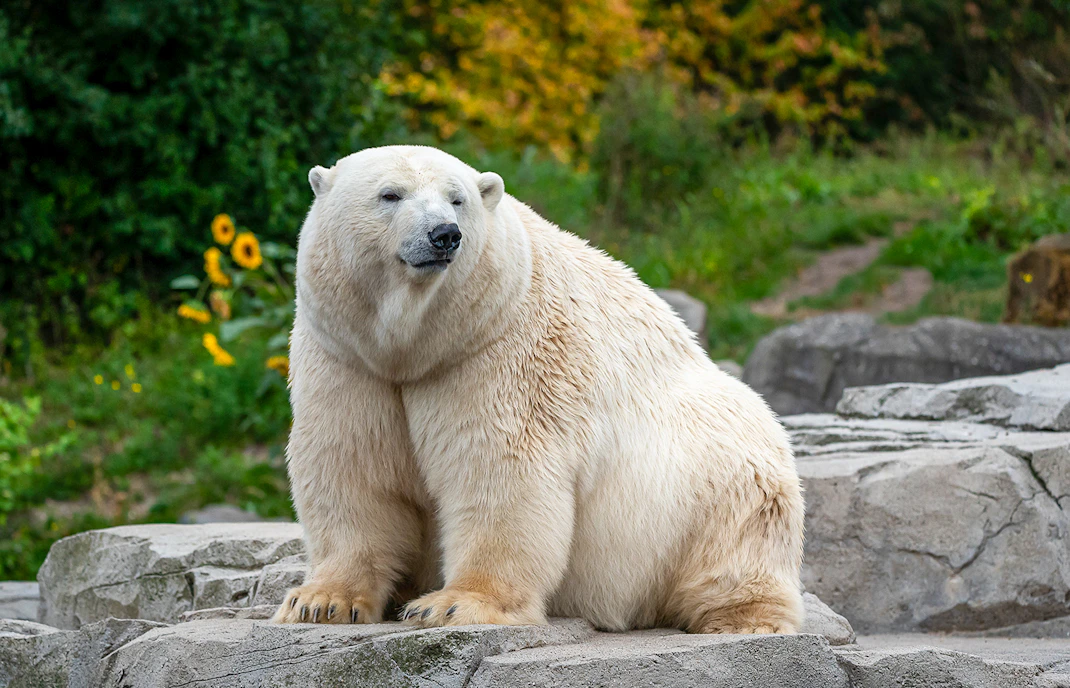
Zoo layout and suggested route
- Africa and hoofstock areas: Open outdoor habitats and large enclosures → good for steady browsing early in the day → budget 45–60 min.
- Elephant House and nearby indoor spaces: One of the most reliable all-weather stops → easy to pair with nearby enclosures → budget 30–45 min.
- Polar World: A major highlight with strong family appeal → worth seeing before the middle of the day gets busier → budget 30–40 min.
- Great apes and other indoor houses: Best when you want a weather break or slower viewing → budget 30–45 min.
- Mühlendorf and children's areas: Petting and family-focused zones → busiest after lunch → budget 30–45 min.
Suggested route: Start with the outer headline habitats first and leave the central family zone for later, because the middle of the zoo gets busier faster than the farthest themed sections.

Maps and navigation tools
- Map: Printed zoo maps and entrance-area wayfinding are the most useful tools here → pick one up as you enter so you can link animal houses without backtracking.
- Signage: Main routes are easy enough to follow, but a map genuinely helps once you start choosing between indoor houses, outer loops, and family areas.
- Audio guide / app: This is best approached as a self-guided visit → route planning matters more than narration for most visitors.
- Large outdoor POIs only: Because this is a 40-hectare outdoor site, an offline screenshot of the map is helpful if you want to track a full loop without repeatedly stopping.
💡 Pro tip: Do not save the farthest habitats for the end of the day, because tired kids and meal-stop detours make the last third of the zoo feel much longer than it looks on the map.
Which animals and habitats should you prioritise?
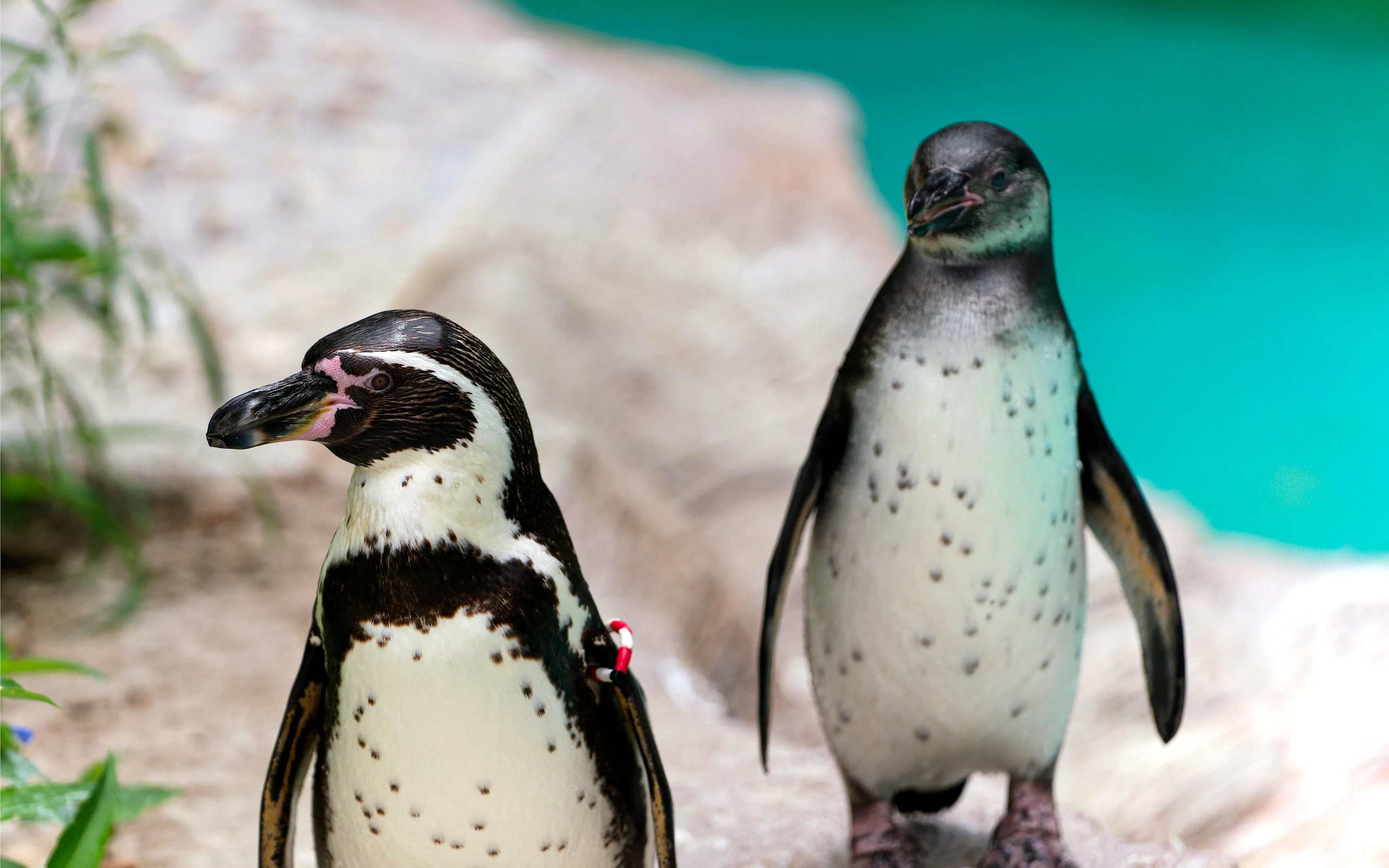
Polar World
Species / habitat: Polar bears, penguins, and cold-climate species
Polar World is one of Hellabrunn's signature stops and one of the sections families head for first. A few extra minutes here often reveal far more movement than a quick glance, and it feels calmer and easier to view earlier in the day before late-morning crowding builds.
Where to find it: Follow the signs from the main route toward the northern outer loop and head here before circling back to the center.
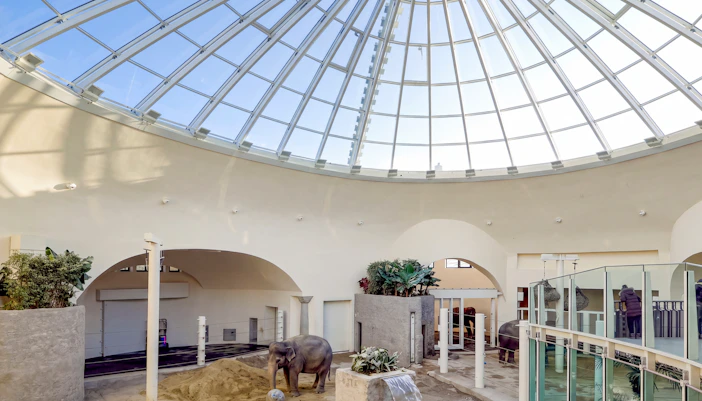
Elephant House
Species / habitat: Asian elephants and large indoor animal house
This is one of the most dependable stops if the weather turns or you need a slower indoor section between longer outdoor stretches. What people often miss is that it works best as a pacing stop in the middle of the visit, not just as the first big sight.
Where to find it: From the main entrance, follow the central route into the major indoor houses before branching toward the outer habitat loop.
Giraffes and open savannah-style habitats
Species / habitat: Giraffes and large open-view enclosures
These open habitats reward patience more than speed because the best views usually come after the first wave of people moves on. Many visitors rush through them on the way to bigger indoor houses and miss how much easier they are to enjoy in cooler morning light.
Where to find it: Stay on the broader outdoor loop after the first major houses and follow the signs toward the larger hoofstock and savannah-style enclosures.
Great apes and indoor houses
Species / habitat: Primates and weather-proof viewing spaces
These are some of the best places to reset your pace if the day is hot, cold, or rainy. Indoor houses become much more crowded after lunch, so they are easier to appreciate before the middle of the day rather than as last-minute detours.
Where to find it: Use the central habitat routes between the main outdoor zones and follow indoor-house signage rather than waiting until the end of the visit.
Mühlendorf and family zones
Species / habitat: Petting and child-focused animal encounters
If you are visiting with children, this is one of the easiest places to build into your day without turning the whole zoo into a rush. What adults often underestimate is how much time families spend here once they arrive, which is why it is usually smarter to leave it for later rather than start here.
Where to find it: Near the more family-oriented central zone, best reached after you have already covered at least one outer highlight section.
Facilities and accessibility
- 🎒 Day bags: A small day bag works much better here than a full backpack because you will cover long outdoor stretches and stop in indoor houses.
- 🚻 Restrooms: Restrooms are easiest to use in the main visitor zones and near the larger indoor buildings, which matters if you are planning a visit with children.
- 🍽️ Cafes and kiosks: Expect practical zoo food and snack stops rather than a destination meal, so they are best used as convenient breaks during a long walking day.
- 🛍️ Gift shop: The simplest souvenir stop is near the main entrance, and it is better saved for the way out so you do not carry extra items across the zoo.
- 💧 Water and shade: Outdoor rest points matter more than at a museum because 40 hectares adds up quickly on warm days.
- 🪑 Seating: Benches are spread through the zoo, but the ones near family zones and food stops fill fastest around lunch.
- 🅿️ Parking: Driving can be convenient, but nearby spaces feel most pressured on sunny weekends and school-break days.
- 🩺 First aid: If you need help during the visit, the main entrance area or the nearest staffed point is the fastest place to ask.
- ♿ Mobility: The zoo, transportation, and surfaces are wheelchair accessible, but a full loop still takes planning because 40 hectares feels long even on good paths.
- 👁️ Visual impairments: Most orientation here is visual and open-air, so picking up a map at the entrance and asking staff to mark key animal houses is the most useful first step.
- 🧠 Cognitive and sensory needs: Colder weekday mornings are usually the easiest window if you want lower noise and more room, while family zones and indoor houses feel busiest after lunch.
- 👨👩👧 Families and strollers: Strollers are permitted, and the broad main paths are manageable, but the full outer loop can feel much longer once young children start tiring.
Hellabrunn is one of Munich's easier family attractions because children get both major animal highlights and open-air space to reset between them.
- 🕐 Time: Around 3–5 hours is realistic with children, and the best priority list is usually one or two headline habitats, an indoor house, and one family-focused zone rather than trying to complete the entire zoo at full speed.
- 🏠 Facilities: The family-friendly parts of the zoo matter most around restrooms, seating, food stops, and child-focused areas, so it helps to build your breaks around those points instead of waiting until everyone is tired.
- 💡 Engagement: Let children pick the next continent-themed section from the map, because the geo-zoo layout makes the day feel more like a journey than a checklist.
- 🎒 Logistics: Bring snacks, layers, and a charged phone, and try to enter earlier rather than later so the longest walking stretches happen before energy drops.
- 📍 After your visit: The Isar meadows nearby are the easiest low-effort follow-up if you want a short riverside walk or a simple picnic break.
Rules and restrictions

What you need to know before you go
- Entry requirement: Hellabrunn Zoo works best as a self-guided general-admission visit, so having your mobile ticket ready at the gate is the simplest way to keep entry moving.
- Bag policy: A small day bag is easier than a large backpack here because this is a long outdoor walking day with indoor stop-ins rather than a short indoor attraction.
- Re-entry policy: If you think you may leave for a meal or break, check the gate policy before stepping out so you do not lose time repeating entry steps.

Not allowed
- 🚫 Food and drink: Bring your own snacks for breaks if allowed on the day, but never feed the animals unless a clearly supervised area explicitly permits it.
- 🚬 Smoking and vaping: Smoke only where the zoo permits it and keep well away from indoor houses, queue areas, and child-focused spaces.
- 🐾 Pets: Leave pets at home unless you are traveling with a service animal the zoo accepts.
- 🖐️ Barriers and animal contact: Do not climb rails, lean into enclosures, or try to touch animals, because the boundaries are there for animal welfare and visitor safety.

Photography
Personal photography is generally the easiest fit for a zoo visit, especially in outdoor habitats. The main distinction is practical rather than artistic: indoor houses, close animal spaces, and crowded viewing areas are the places where flash, bulky gear, or intrusive filming cause the most issues. Treat flash, tripods, and selfie sticks cautiously and follow the posted rules in animal houses if a specific area is more restrictive than the outdoor paths.
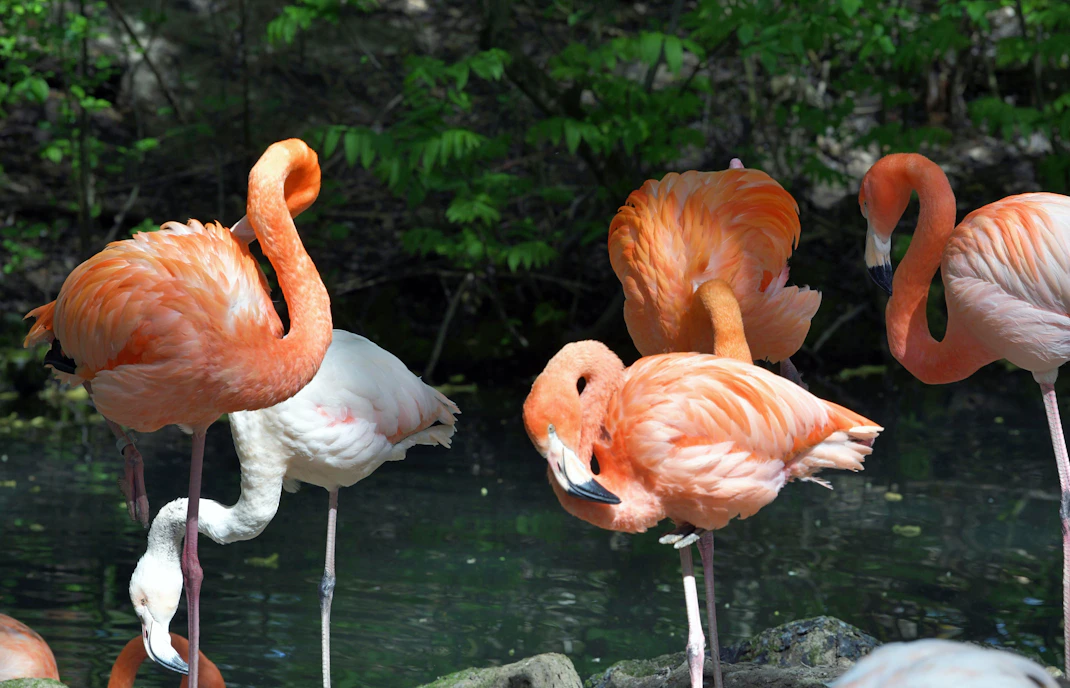
Good to know
- Weather planning: A zoo day changes much more with heat, rain, and cold than a museum visit, so your route and pacing may need adjusting once you are inside.
- Viewing patience: The first 30 seconds at an enclosure are rarely the best, and even a short wait after the initial crowd moves on often improves your view.
Practical tips
- Booking and arrival: Book the date you actually want rather than treating this as a last-minute filler, because zoo days depend heavily on weather, energy levels, and whether you want the calmer first part of the day.
- Pacing: Save your best energy for the outer headline habitats first, because once you drift into food stops, indoor houses, and family zones, it is surprisingly easy to lose an hour without covering much ground.
- Crowd management: Weekday mornings work best here not just because they are quieter, but because the zoo feels more spacious before lunch traffic builds around the central paths and children's areas.
- What to bring or leave behind: Bring layers, water, and a portable charger, and leave heavy extras behind, because a full 4.5–5 hour visit across 40 hectares makes every unnecessary item feel heavier by the last third of the day.
- Food and drink: Eat either before you enter or after you have covered your top-priority habitats, because stopping too early near the central cafes can break your route before you reach the outer sections.
- Weather strategy: On hot, cold, or rainy days, alternate indoor houses with outdoor habitats instead of trying to power through one long outdoor loop in a single stretch.
What else is worth visiting nearby?
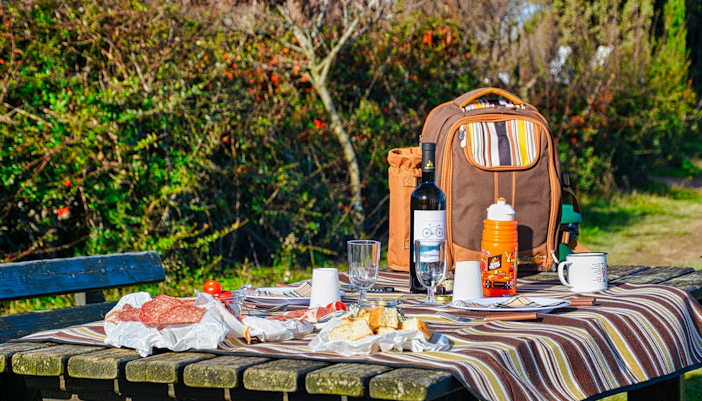
Commonly paired: Flaucher and the Isar meadows
Distance: 800 m – 10 min walk
Why people combine them: It is the easiest natural add-on to a zoo day if you want a riverside walk, a picnic, or a low-effort break after several hours on foot.

Commonly paired: Bavaria Filmstadt
Distance: 6 km – about 20 min by car or 30–35 min by transit
Why people combine them: It gives families a very different second half of the day, with film sets and studio-style experiences after a morning outdoors.

Also nearby
Maria Einsiedel
Distance: 1.3 km – about 15 min walk
Worth knowing: In warmer weather, it is a good seasonal follow-up if you want a more local, less touristy break after the zoo.
Thalkirchen riverside paths
Distance: 500 m – about 5 min walk
Worth knowing: If you do not want another ticketed attraction, this is the easiest nearby option for a short scenic walk before heading back into the city.
Eat, shop and stay near Hellabrunn Zoo
- On-site: Zoo cafes and kiosks are useful for convenience, snacks, and simple family breaks, but they are not the reason to come hungry.
- Gasthaus Hinterbrühl (about 10 min walk, Hinterbrühl 2, 81545 Munich): Bavarian cooking in a greener setting, and a stronger choice if you want a proper sit-down meal after the zoo.
- Zum Flaucher (short drive from the zoo, Isar floodplain area): Classic beer-garden style stop that works well after a long outdoor day, especially in good weather.
- Around Thalkirchen station (about 5–10 min from the zoo area): Practical neighborhood options if you want something quicker before heading back toward central Munich.
- 💡 Pro tip: Eat after your first major habitat loop, not before it, because early lunch near the center is the easiest way to lose momentum before you reach the quieter outer sections.
- Zoo gift shop: The most practical shopping stop is the entrance-area gift shop, where soft toys and easy-to-carry souvenirs make the most sense for families.
- Central Munich shopping districts: If you want something beyond souvenirs, save it for later in the day and shop back in the city center rather than carrying purchases around the zoo.
Thalkirchen is green, quiet, and convenient for the zoo, but it is not the most useful base for most Munich trips unless zoo access is a major priority. It suits visitors who want a calmer neighborhood feel and do not mind using transit for the rest of the city. For a short first-time stay in Munich, central neighborhoods are usually the better fit.
- Price point: The area generally feels residential and mid-range rather than heavily tourism-driven, with fewer classic hotel clusters than central Munich.
- Best for: Visitors who want quick zoo access, a quieter night, and easy walks to the Isar rather than nonstop sightseeing on the doorstep.
- Consider instead: Altstadt-Lehel or Ludwigsvorstadt-Isarvorstadt make more sense for longer city stays because you are better placed for museums, restaurants, and evening plans while still reaching Hellabrunn easily by transit.
Frequently asked questions about visiting Hellabrunn Zoo
Most visits take 4.5–5 hours if you want to see the zoo properly. You can do a tighter 2–3 hour highlights loop, but that usually means focusing on the headline habitats and family favorites rather than covering the full 40-hectare site.
Booking in advance is the easiest option, especially if you want to lock in a specific day and arrive with less friction at the gate. Hellabrunn is flexible enough for self-guided visits, but advance booking helps most on weekends, holidays, and good-weather days when more families plan the same outing.
Usually not, because Hellabrunn is more about pacing a large outdoor visit than beating a long admission bottleneck. The bigger gain comes from arriving earlier in the day, when entry is smoother and the zoo is easier to navigate before the central paths and indoor houses get busier.
Arrive 15–20 minutes before you want to start walking the zoo. Even without a rigid museum-style route, that buffer helps you clear the entrance calmly, pick up a map, sort out snacks or stroller setup, and begin before the late-morning crowds build.
Yes, a small day bag makes sense for a zoo visit. The better question is size: because you may be walking for 4.5–5 hours across outdoor paths and indoor houses, a light bag with water, layers, and snacks is much more comfortable than a full backpack.
Yes, personal photos are usually the natural fit for a zoo day. The moments to be more careful are inside animal houses and in tighter viewing areas, where flash or bulky equipment can be more disruptive and the posted rules matter more.
Yes, groups can visit comfortably, but the zoo works best if you agree on a simple route before entering. Because the site is spread across 40 hectares, large groups lose time quickly when they try to make every stop together without clear meeting points.
Yes, it is one of Munich's stronger family attractions because it combines major animal highlights with open-air space and stroller-friendly access. The visit works best when you plan around energy levels and accept that young children usually enjoy a focused half-day more than a full zoo marathon.
Yes, the zoo, transportation, and surfaces are wheelchair accessible. The main thing to plan for is scale rather than access alone, because 40 hectares still means a long day and it helps to build in rest stops instead of treating the route as short.
Yes, you can eat on-site or nearby. The on-site options are best treated as convenient meal and snack breaks during a long walking day, while nearby neighborhood spots are the better choice if you want a fuller sit-down meal before heading back into Munich.
Bringing simple snacks is the most practical approach for many visitors, especially families pacing a long day outdoors. The important distinction is that your own food may work for your break, but feeding animals is never something to assume is allowed unless a supervised area clearly says so.
Adjust your route rather than canceling the day immediately. On difficult-weather days, alternate outdoor sections with indoor houses, slow your pace, and focus on a balanced visit instead of trying to force a full 40-hectare loop when conditions make it less enjoyable.
More reads
Hellabrunn Zoo tickets
Hellabrunn Zoo highlights
Getting to Hellabrunn Zoo